
Best Spine Surgeon in Noida and Delhi NCR: A Complete Guide to Choosing the Right Expert for Complex Spine and Spinal Deformity Surgery
Back and neck pain are common. Complex spinal deformity is not, and it shouldn’t be treated by just anyone with a scalpel and a spine implant catalogue. If you or a family member has been told you need surgery for scoliosis, kyphosis, spondylolisthesis, spinal stenosis, a spinal tumor, or a failed previous spine surgery, the single biggest decision you will make isn’t which implant to use; it’s which surgeon to trust.
Noida and the wider Delhi NCR region (Gurugram, Ghaziabad, Faridabad, New Delhi) have become one of India’s most active hubs for advanced spine care, with several tertiary hospitals offering navigation-guided and minimally invasive spine surgery. That’s good news, but it also means patients now have to sift through dozens of hospital websites, each claiming to have “the best spine surgeon.” This guide is meant to cut through that noise and give you a practical, medically grounded framework for evaluating any spine surgeon you’re considering, in Noida, Delhi NCR, or anywhere else.
Why "Complex Spine" and "Spinal Deformity" Surgery Is a Different Category
Not all spine surgery is equal in risk or skill requirement. A single-level disc surgery is a very different operation from a multi-level scoliosis correction in an adult or a revision surgery after a previous fusion has failed.
Complex spine surgery typically includes:
- Adult and pediatric spinal deformity correction (scoliosis, kyphosis, kyphoscoliosis)
- Multi-level degenerative deformity in older adults
- Revision spine surgery after a prior failed fusion or infection
- Spinal tumour resection (primary or metastatic)
- Spinal trauma with instability or neurological involvement
- Complex spondylolisthesis with significant slip
- Congenital spine deformities
These cases usually involve longer operative times, larger blood loss, more implant hardware, and a meaningfully higher risk of complications than routine spine procedures. That’s exactly why the surgeon’s specific experience with this category of surgery, not just “spine surgery” in general, matters so much.
What Makes a Spine Surgeon "Best" in Noida and Delhi NCR?
Every hospital website will tell you their surgeon is “highly experienced” and “internationally trained.” Here’s what to actually check.
1. Fellowship Training Specific to Spine Deformity
A general orthopaedic or neurosurgery degree qualifies a doctor to operate on the spine. It does not automatically mean they are trained in deformity correction. Look for:
- A dedicated spine fellowship (1–2 years), ideally at a recognised deformity-focused centre
- Membership or training affiliation with bodies such as the Scoliosis Research Society (SRS), AO Spine, or the Association of Spine Surgeons of India (ASSI)
2. Case Volume in Complex Cases Specifically
Ask yourself: “How many adult/pediatric deformity corrections have you performed in the last two years?” A surgeon who performs a large number of uncomplicated disk procedures but few deformity cases is not the same as a devoted deformity specialist. Reputable surgeons will respond to this question openly and without hesitation.
3. Multidisciplinary Team & Hospital Infrastructure
Complex spine surgery is not a one-person show. Check whether the hospital has:
- Intraoperative neuromonitoring (IONM), which is crucial for lowering nerve injury risk in deformity correction.
- A professional neuroanaesthesia staff experienced in extensive spine surgeries.
- Backup ICU/critical care for post-operative recovery.
- Access to intraoperative navigation or O-arm imaging, as appropriate.
4. Transparent Complication and Outcome Discussion
A trustworthy surgeon will discuss realistic outcomes, potential complications, and revision rates honestly, not just success stories. Be cautious of any consultation that promises a guaranteed outcome or minimises risk entirely.
5. Verifiable Credentials
Check the surgeon’s NMC registration, listed qualifications, and current hospital affiliation. Genuine patient reviews on independent platforms (Google Reviews, Practo) are a useful secondary signal, but they should never be used in place of direct qualification verification.
Why Noida and Delhi NCR Have Become a Spine Care Hub
Several factors have made this region a common destination for spine treatment, including for patients traveling from other states and neighboring countries:
- Concentration of large multi-specialty and super-specialty hospitals with dedicated spine units
- Availability of advanced imaging (3D CT, MRI, intraoperative navigation) in most tertiary centers
- Relatively better cost-to-quality ratio compared to many Western healthcare systems, which also draws medical tourism
- A deep pool of fellowship-trained orthopaedic spine surgeons and neurosurgeons practicing across Noida, Delhi, Gurugram, and Faridabad
That said, concentration of hospitals doesn’t mean uniform quality. The evaluation criteria above still apply regardless of how many hospitals are nearby.
Questions to Ask During Your Consultation
Bring this list to your first consultation; a confident, experienced spine surgeon will welcome these questions:
- What is my specific diagnosis, and what is causing it?
- What are all my treatment options, including non-surgical ones?
- How many similar cases (same diagnosis, similar severity) have you personally performed?
- What is your complication rate for this specific procedure?
- What technology will be used (navigation, neuromonitoring, minimally invasive approach)?
- What does the recovery timeline realistically look like?
- What happens if something needs to be revised later?
- Who is on my surgical and post-op care team?
Red Flags to Watch For
- Pressure to schedule surgery immediately without a second opinion
- Reluctance to answer questions about case volume or complications
- No mention of non-surgical alternatives when they are medically relevant
- Vague or unverifiable claims of being “No. 1” or “world’s best” with no supporting credentials
- No clear pre-operative imaging review or explanation of your specific pathology
What Recovery From Complex Spine Surgery Typically Involves
Recovery timelines vary significantly by procedure and individual health, but general phases usually include:
- Hospital stay: Typically several days to over a week for significant deformity treatment, depending on its complexity.
- Early mobilization: Most modern guidelines recommend supervised walking within 24-48 hours, where medically suitable.
- Bracing: Sometimes necessary post-operatively, depending on the surgery.
- Physiotherapy: Structured rehabilitation over weeks and months.
- Follow-up imaging: To validate the fusion progress and hardware position.
- Return to normal activity: Can vary from a few weeks (minimally invasive operations) to several months (severe deformity correction).
Your surgeon should give you a timeline specific to your procedure rather than a generic estimate.
Frequently Asked Questions
How do I know if I need a spine deformity specialist versus a general spine surgeon?
If your diagnosis involves scoliosis, kyphosis, a significant spinal curve, a failed previous surgery, or a spinal tumor, you should specifically seek a surgeon with deformity-focused fellowship training and documented case experience in that category, not just general spine surgery experience.
Is minimally invasive surgery always better than open surgery for complex spine cases?
Not necessarily. Minimally invasive techniques can reduce blood loss and recovery time for select cases, but many complex deformity corrections still require open surgery for adequate correction and safety. The right approach depends on your specific anatomy and diagnosis; a good surgeon will explain why a particular approach is recommended for your case.
How many opinions should I get before complex spine surgery?
For major elective spine surgery, a second opinion is a reasonable and common practice, and most experienced surgeons will not discourage it. It's particularly worth doing if surgery is being recommended urgently without a clear discussion of alternatives.
What is the difference between a spine surgeon and a neurosurgeon for spine care?
Both orthopaedic spine surgeons and neurosurgeons can be trained in complex spine surgery through fellowship programs. The relevant factor is not the base specialty but the surgeon's specific fellowship training and case experience in complex/deformity spine surgery.
Can spinal deformity in adults be corrected, or is treatment only for children?
Adult spinal deformity correction is a well-established field, distinct from pediatric scoliosis surgery, and is commonly performed for degenerative curves that develop later in life. Treatment goals and techniques differ from pediatric cases, which is another reason to confirm your surgeon's specific experience with adult deformity correction if that applies to you.
Meet a Spine & Spinal Deformity Surgeon Practicing in Noida & Delhi NCR: Dr. Naveen Pandita
To make this guide concrete rather than purely theoretical, here’s how one practising specialist in the region maps against the evaluation framework above.
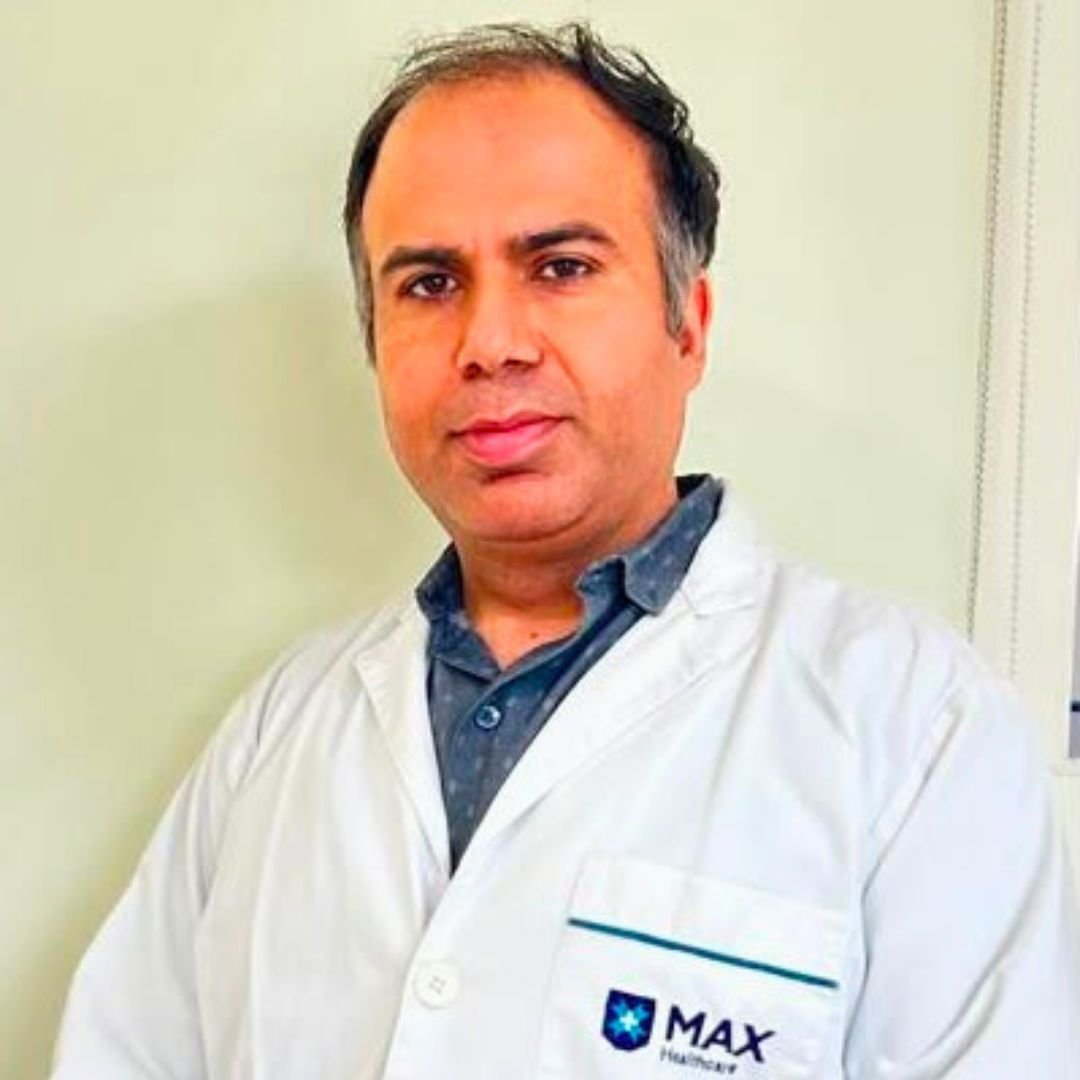
Dr Naveen Pandita is a fellowship-trained spine and spinal deformity surgeon based in Noida and the Delhi NCR region, with a practice focus spanning complex spine conditions, adult and pediatric spinal deformity, revision spine surgery, and minimally invasive/endoscopic spine techniques.
Hospital & clinic affiliations:
- Max Super Speciality Hospital, Vaishali, Ghaziabad — Department of Spine Surgery and Spinal Deformity (Mon–Sat, 9 AM–5 PM; Sun 10 AM–12 PM)
- Noida Sports Injury Centre Clinic, Block D, Sector 26, Noida (5 PM–7:30 PM)
- Max Multi Speciality Centre, Sector 19, Noida (Mon–Sat, 5 PM–6 PM)
- Max MedCentre, Meerut (Every Tuesday, 12 PM–2 PM)
- Pushpanjali Medical Centre, Karkardooma, Anand Vihar, Delhi (Every Tuesday & Friday, 5 PM–7 PM)
Conditions treated: chronic back and neck pain, lumbar and cervical herniated discs, sciatica, spinal stenosis, scoliosis and kyphosis, spinal fractures and trauma, revision spine surgery cases, and pediatric and adult spinal deformities.
Areas of focus: pediatric spine deformity, scoliosis and kyphosis correction, complex spine conditions, spinal tumours, revision spine surgery, minimally invasive and endoscopic spine surgery, and anterior spine surgery.
Approach: The practice emphasises a diagnosis-first, non-surgical-when-possible philosophy; surgery is positioned as a last resort after conservative treatment options have been considered, which aligns with the “transparent, patient-centred” criterion covered earlier in this guide.
Contact: 📞 +91-9871583824 | +91-8826575794
Final Takeaway
There is no single confirmed “best spine surgeon in Noida and Delhi NCR” claim; it is entirely reliant on your specific diagnosis and should be backed up with verifiable qualifications rather than marketing fluff. Use the framework above to evaluate any surgeon you’re considering, including fellowship training, case volume in your specific disease, hospital infrastructure, risk transparency, and verifiable registration. Don’t be reluctant to get a second opinion for major elective surgery.