
Cervical Spine Surgery Treatment in Noida: A Complete Guide by Dr Naveen Pandita
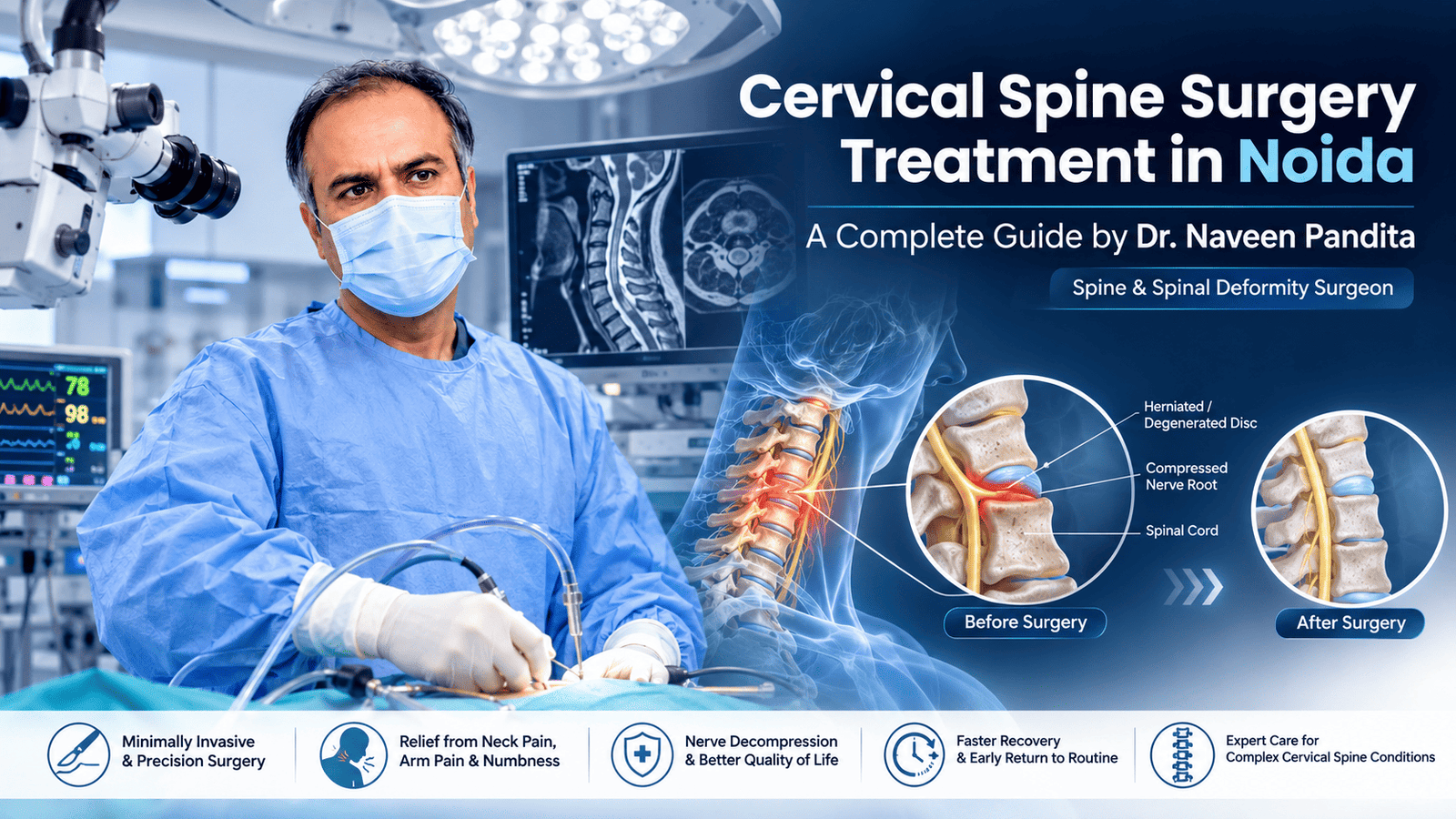
If you have been living with neck pain, tingling in your arms, or stiffness that just won’t go away, you are not alone. Thousands of people across Delhi NCR search every month for reliable cervical spine surgery treatment in Noida, and for good reason: the neck houses some of the most delicate nerve pathways in the entire body. When something goes wrong here, it doesn’t just affect your neck; it can affect the way you walk, hold a cup of tea, or even breathe comfortably.
This guide walks you through everything you need to know about cervical spine problems, when surgery actually becomes necessary, and how to choose the right cervical doctor in Noida for your treatment journey.
What Is Cervical Spine Surgery, and Why Does It Matter?
The cervical spine is the section of your backbone that runs through the neck, made up of seven small vertebrae that support the weight of your head while allowing it to turn, tilt, and nod. Because this region carries the spinal cord and the nerves that control your arms and hands, even minor damage here can cause disproportionately large symptoms.
Cervical spine surgery becomes a consideration when a structural, degenerative, or traumatic issue in the neck starts pressing on the spinal cord or nerve roots. This pressure can show up as persistent pain, numbness, weakness in the hands, or in severe cases, difficulty with balance and coordination. A qualified spine specialist in Noida will usually only recommend surgery after conservative treatment has been tried and has failed to bring relief.
Do You Actually Need Cervical Spine Surgery?
This is the question almost every patient asks first, and it is a fair one. Not every neck problem needs an operation. In fact, roughly 80% of cervical spine issues respond well to non-surgical management, medication to control inflammation, targeted physiotherapy, posture correction, and simple lifestyle changes.
Surgery is generally considered for the remaining group of patients whose condition falls into categories such as:
- Persistent neurological symptoms, such as weakness or numbness, do not improve with treatment.
- After an injury, the cervical vertebrae might fracture or become unstable.
- Significant spinal cord compression might cause balance or coordination difficulties.
- Nerve root compression resulting in acute, radiating arm pain (cervical radiculopathy) that has not responded to months of conservative treatment.
If you have been searching “cervical specialist doctor near me” because your symptoms have lasted more than a few weeks despite rest and medication, it’s worth getting a proper clinical evaluation rather than waiting it out.
Common Causes and Who Is at Risk
Certain lifestyles and occupations quietly increase the risk of cervical spine problems over time:
- Desk jobs and screen time – Spending long hours looking down at a laptop or phone stresses the neck muscles and discs, resulting in “tech neck.”
- Manual labour involving head-loading – Carrying large weights on the head or shoulders for an extended period of time produces recurring tension on the cervical vertebrae.
- Road traffic accidents or falls – Sudden trauma to the neck, even if it appears minor, can cause fractures or ligament disorders that develop later.
- Family history – Some persons are predisposed to disc degeneration and cervical spondylosis.
Recognising these risk factors early and consulting a cervical specialist doctor near me at the first sign of trouble can often prevent the problem from progressing to a surgical stage.
Types of Cervical Spine Surgery Available in Noida
Modern spine care in Noida offers several surgical approaches, each suited to a different kind of problem. A good cervical doctor in Noida will choose the technique based on your imaging reports, symptoms, and overall health.
1. ACDF (Anterior Cervical Discectomy and Fusion)
This is one of the most commonly performed cervical surgeries. The surgeon removes the damaged disc that is pressing on the nerve or spinal cord through a small incision in the front of the neck and under a surgical microscope before fusing the segment.
2. Cervical Disc Replacement
For select patients with a degenerated disc, instead of fusing the segment, the surgeon replaces the disc with an artificial implant. This approach aims to preserve natural neck movement rather than restricting it.
3. Laminectomy or Laminotomy
This method, performed from the back of the neck (posterior approach), includes removing all or part of the lamina, the vertebra’s bony arch, to relieve spinal cord pressure. Screws may be placed later to help keep the spine stable.
4. Endoscopic Cervical Discectomy
A more recent, minimally invasive method uses an endoscope. In comparison to traditional open or ACDF surgery, it typically requires a smaller incision, a shorter hospital stay, and a faster recovery. It requires specialist surgical expertise, so confirm your surgeon’s familiarity with this approach.
Each of these approaches has its own indications, and no single technique is “best” for everyone; the right choice depends entirely on your diagnosis.
What Happens During Recovery?
Recovery timelines vary depending on the type of surgery performed and the extent of nerve or spinal cord involvement before the operation. Broadly, here’s what patients can expect:
- A cervical collar may be used for a few weeks to aid with healing.
- If the operation addressed a disk problem, many patients experienced immediate pain relief.
- Nerve recovery after spinal cord compression surgery might take weeks to months because nerves heal at a slower rate than bone or disk tissue.
- After the surgical site has stabilized, rehabilitation is usually started gradually.
- Regular follow-ups with your spine surgeon help to track healing and discover problems early.
Patients commonly ask about the success rate of cervical spine surgery, and thanks to advances in microscopic and endoscopic treatments, outcomes are far better today than a decade ago, with less blood loss, fewer incisions, and a speedier return to regular activities.
Choosing the Best Doctor for Cervical Spine Surgery Treatment in Noida
Given the complexity of cervical spine surgery, the surgeon’s experience is crucial. Dr Naveen Pandita, a leading cervical surgeon in Noida, specialises in minimally invasive and complex cervical spine procedures such as ACDF, cervical disc replacement, and endoscopic discectomy.
When evaluating a spine specialist in Noida, consider asking:
- How many cervical spine procedures have they done, and what is their complication rate?
- Do they always try conservative measures before recommending surgery?
- Are they conversant with newer techniques like endoscopic cervical discectomy?
- What is the plan for post-operative care and rehabilitation?
- Are they transparent about the risks, recovery time, and anticipated outcomes?
A trustworthy surgeon will never rush you into an operation. Instead, they will walk you through your MRI findings, explain why conservative care may or may not be appropriate, and only recommend surgery when it is genuinely the safest path forward.
Frequently Asked Questions
Is cervical spine surgery painful?
Modern cervical surgeries are performed under general anaesthesia, and most patients report the post-operative pain is manageable with prescribed medication. Discomfort typically reduces significantly within the first couple of weeks.
How long does recovery take after cervical spine surgery?
For disc-related surgery, many patients return to light activity within a few weeks. For cases involving spinal cord decompression, full neurological recovery can take several months.
Which levels of the cervical spine are most commonly operated on?
The C5-C6 and C6-C7 levels are among the most frequently affected and operated segments, since they experience the greatest mechanical stress during neck movement.
Is endoscopic cervical discectomy better than ACDF?
Endoscopic discectomy generally involves a smaller incision and shorter hospital stay, but it isn't suitable for every patient. Your surgeon will determine the right approach based on your specific disc pathology and overall spine anatomy.
Can cervical spine problems be treated without surgery?
Yes, the majority of cervical spine cases, especially in early stages, respond well to physiotherapy, medication, and lifestyle changes. Surgery is reserved for cases where conservative treatment fails, or neurological symptoms are significant.
Final Thoughts
Neck pain that lingers, travels down your arm, or causes numbness or weakness is not to be ignored. Whether your condition requires physiotherapy or surgery, seeing an expert cervical specialist doctor near you as soon as possible can make a significant difference in your long-term outcome.
If you live in Delhi NCR and need dependable cervical spine surgery treatment in Noida, an experienced spine surgeon in Noida like Dr Naveen Pandita can help you get an accurate diagnosis and a treatment plan tailored to your specific condition, whether that means avoiding surgery altogether or undergoing a minimally invasive procedure that allows you to return to normal life more quickly.