
Back Pain Treatment in Noida: Causes, Diagnosis, Treatment Options & When to See a Spine Specialist
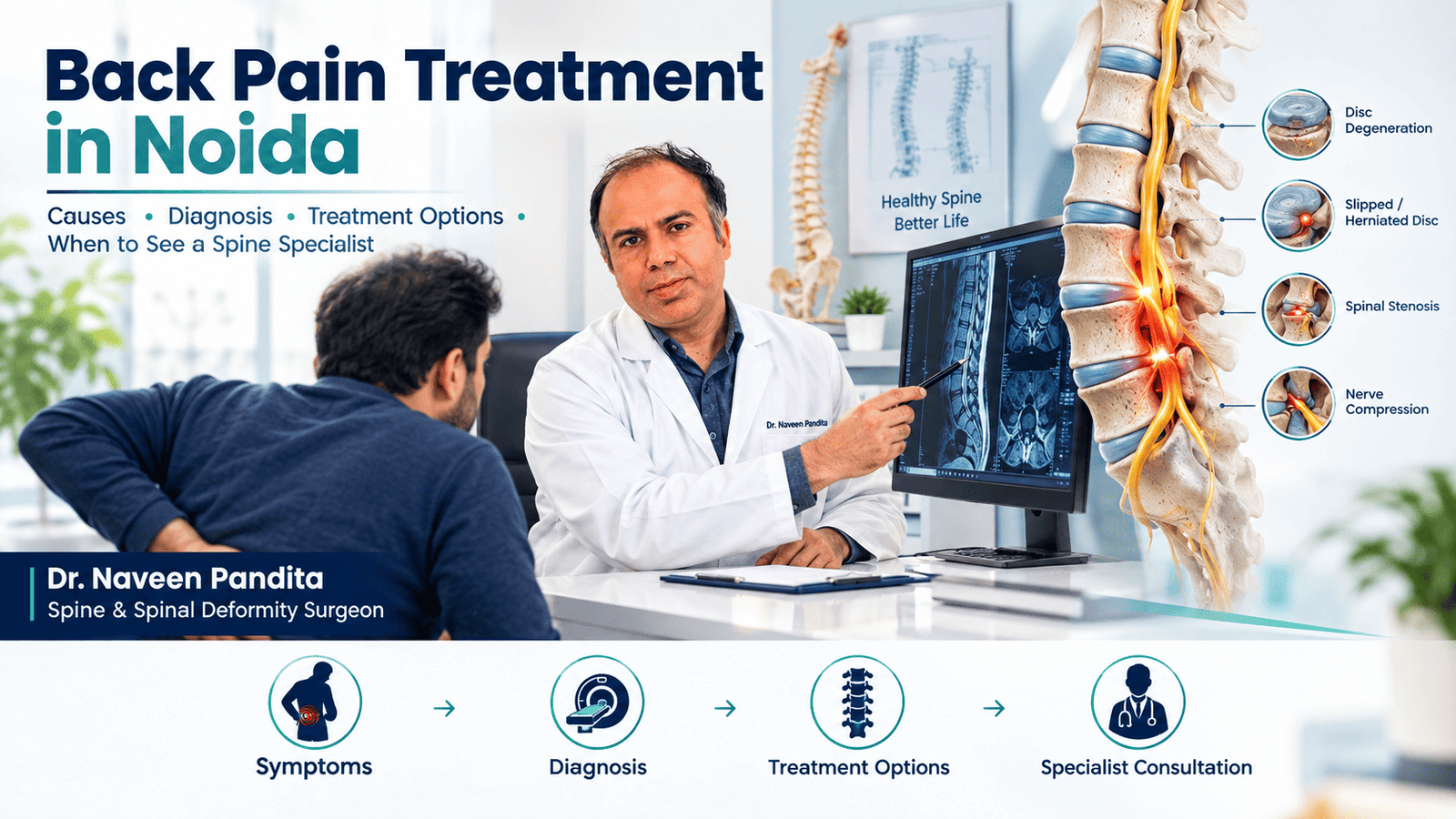
If you’ve been living with back pain for more than a few weeks, you’ve probably already asked yourself the same questions most patients ask: Is this serious? Will it go away on its own? Do I need a scan? And which doctor should I actually be consulting?
Back pain is one of the most common reasons people search for a back pain treatment provider in Noida, and for good reason, it can affect how you sit, sleep, work, and move through an ordinary day. The encouraging part is that most back pain is manageable, and a structured approach to diagnosis and treatment usually leads to meaningful relief. This guide walks through what typically causes back pain, when it needs medical attention, how it’s diagnosed, and what treatment options, from simple lifestyle changes to specialist care, actually look like.
What Is Back Pain and Why Does It Happen?
Back pain refers to discomfort anywhere along the spine, most commonly in the lower back (lumbar region), though it can also involve the mid-back or neck. It happens because the spine is a complex structure of bones (vertebrae), discs, joints, ligaments, muscles, and nerves working together, and irritation or dysfunction in any one of these can produce pain.
For many people, back pain is short-lived and linked to muscle strain, an awkward movement, or prolonged poor posture, especially with long hours at a desk or on a two-wheeler in city traffic. For others, it can be a sign of a more specific problem, such as a disc pressing on a nerve, that benefits from a proper evaluation rather than guesswork.
Common Causes of Back Pain
Muscle Strain and Poor Posture
Sitting for extended periods of time, lifting inappropriately, or sleeping in an awkward position can all put strain on the muscles and ligaments that support the spine. This is the most common cause of new-onset back pain, and it usually resolves with rest, mild movement, and activity moderation.
Slipped Disc or Herniated Disc
Each vertebra is cushioned by a disc with a soft inner core. When this core pushes through the outer layer, it’s commonly called a slipped or herniated disc. Depending on its location, it may irritate a nearby nerve and cause pain that travels down the leg.
Sciatica
Sciatica is not a diagnosis in and of itself; rather, it refers to pain that spreads along the sciatic nerve, usually from the lower back to the buttock and down one leg. It is typically caused by a disk pressing on a nerve root, and while it might be alarming, a large proportion of cases respond well to non-surgical treatment.
Spinal Stenosis
The narrowing of the spinal canal might squeeze nerves. It becomes more common with age and is commonly associated with leg pain, heaviness, or cramping, which worsens with walking and improves with sitting or leaning forward.
Facet Joint Problems
The small joints connecting adjacent vertebrae (facet joints) can become stiff, inflamed, or arthritic, producing localised back pain that may worsen with bending backwards or twisting.
Spondylolisthesis
This occurs when one vertebra slips forward over the one below it, sometimes due to a stress fracture or wear-related changes. It can cause lower back pain, stiffness, and in some cases nerve-related leg symptoms.
Spinal Deformity and Other Causes
Scoliosis (an abnormal lateral bend in the spine) and kyphosis can also cause chronic back pain, especially as they progress. Infections, fractures, and other underlying medical issues may cause back pain less frequently, which is why persistent symptoms should be evaluated by a doctor rather than self-diagnosed.
When Should You See a Doctor for Back Pain?
Mild back pain from muscle strain often settles within a few days to a couple of weeks with rest and simple care. However, certain symptoms suggest you should not wait and should seek prompt medical evaluation:
- Pain that persists beyond two to three weeks despite rest and basic care
- Pain radiating down one or both legs, especially with numbness or tingling
- Progressive weakness in the leg or foot, such as difficulty lifting the front of your foot
- Numbness around the groin or inner thighs (saddle-area numbness)
- New difficulty controlling your bladder or bowels
- Difficulty walking or a noticeable change in balance
- Fever accompanied by severe back pain
- Unexplained weight loss along with back pain
- Back pain following a fall, accident, or significant trauma
- Back pain that is worse at night or doesn’t improve with rest
These “red flag” symptoms don’t automatically mean something serious is happening, but they do mean a spine specialist or emergency evaluation should assess you promptly rather than trying to manage things on your own.
Which Doctor Should You Consult for Back Pain?
This is one of the most common questions patients have, and the honest answer is: it depends on your symptoms and how long they’ve lasted.
- General physician – A general practitioner is a good place to start if you have new, minor back discomfort with no warning flags.
- Orthopaedic doctor – Recommended for musculoskeletal pain, including bones, joints, or general spine and joint issues.
- Physiotherapist – Useful for posture-related pain, muscle strain, and as part of a continuous healing and preventative strategy.
- Pain specialist – Necessary when pain management, including certain injection-based treatments, is being investigated.
- Spine specialist – Especially useful when the pain is severe, recurrent, spreads down the leg, causes neurological symptoms (numbness, weakness), or does not respond to early conservative treatment.
If your back pain has lasted several weeks, keeps returning, or comes with leg pain, numbness, or weakness, it’s reasonable to consult a spine specialist directly rather than cycling through multiple providers. Dr Naveen Pandita, Spine & Spinal Deformity Surgeon in Noida, is one such option for patients in the region who need a focused spine evaluation.
If your symptoms match any of the warning signs listed above, don’t wait for them to worsen; book a spine consultation as soon as you can.
How Is Back Pain Diagnosed?
A proper diagnosis starts well before any scan is ordered.
- Clinical history – Your doctor will inquire about when the pain began, what makes it better or worse, whether it radiates, and whether you have any numbness, weakness, or other accompanying symptoms.
- Physical and neurological examination – This evaluates your spine’s range of motion, muscular strength, reflexes, and sensation to determine whether a nerve is implicated.
- Imaging, when indicated – not every patient suffering from back discomfort requires a scan. X-rays can evaluate bone alignment and structural alterations; an MRI is typically utilised when there is suspicion of disc, nerve, or soft-tissue involvement, or when red-flag symptoms are present; and a CT scan may be used in particular conditions, such as examining bone detail following trauma.
Imaging is a tool that supports the clinical picture; it isn’t ordered automatically for every ache, and results are always interpreted alongside your symptoms and examination findings.
Back Pain Treatment in Noida: What Are the Options?
Treatment for back pain is not one-size-fits-all. It depends entirely on the underlying cause, severity, duration, and whether nerve involvement is present.
Lifestyle and Activity Modification
Many patients find that modifying posture, taking mobility breaks during long desk hours, employing proper lifting technique, and maintaining a healthy body weight can significantly minimise spinal strain.
Medicines When Medically Appropriate
Pain-relieving or anti-inflammatory medication may be prescribed for a limited period to manage acute discomfort, always based on your specific health profile and under medical guidance.
Physiotherapy and Rehabilitation
Targeted exercises assist to strengthen the muscles that support the spine, improve flexibility, and change pain-causing movement patterns. Physiotherapy is often the first line of treatment for mechanical and postural disorders.
Image-Guided Injections in Selected Patients
In some situations of nerve-related pain that has not responded well to conservative treatment, image-guided injections can be utilised to reduce inflammation surrounding an irritated nerve as part of a larger treatment plan.
Minimally Invasive Spine Procedures
For select conditions, minimally invasive spine techniques allow certain problems, such as specific disc or nerve compression issues, to be addressed through smaller incisions, which can be associated with a shorter recovery period compared to traditional open surgery, depending on the individual case.
Spine Surgery When Conservative Treatment Is Not Enough
Surgery is not the primary option for treating back pain. It is frequently considered only when significant nerve compression causes progressive weakness, red-flag symptoms appear, or a well-tried course of conservative treatment has failed to provide adequate relief. The decision is always made based on the diagnosis, symptom severity, and overall health.
If conservative treatment hasn’t helped after a reasonable trial, or if your symptoms are progressing, that’s the point to discuss further options, including whether a procedure is genuinely necessary, with a spine specialist.
How Dr Naveen Pandita Approaches Back Pain Treatment in Noida
Dr Naveen Pandita is a fellowship-trained Spine & Spinal Deformity Surgeon who evaluates and treats patients with back pain, sciatica, slipped or herniated discs, spinal stenosis, and cervical and lumbar spine disorders in and around Noida.
His clinical interests include minimally invasive spine surgery, complex spine problems, and spinal abnormalities such as scoliosis and kyphosis in adults and children, where relevant. The basic approach to back pain is structured: a comprehensive history and examination, suitable investigations only when clinically required, and a treatment plan that begins with conservative choices whenever possible, saving injections or surgery for cases where they are genuinely necessary.
The underlying philosophy is straightforward: an accurate diagnosis should guide treatment, not the other way around. Not every patient with back pain needs an MRI, and not every disc problem needs surgery.
Why Choose a Spine Specialist for Persistent or Complex Back Pain?
For simple, short-lived back pain, a general physician or physiotherapist is often sufficient. A spine specialist becomes more relevant when:
- Despite receiving basic care, the pain has lasted several weeks.
- Symptoms radiate into the leg, particularly numbness or weakness.
- You’ve already tried physiotherapy or medicine without satisfactory alleviation.
- You have a known spine issue, such as a herniated disk, stenosis, or spinal deformity, which needs ongoing management.
- The previously identified red-flag symptoms are present.
A spine specialist’s training is focused specifically on the anatomy and disorders of the spine, which allows for a more targeted evaluation of whether a problem is muscular, discogenic, neurological, or structural, and which treatment pathway genuinely fits your situation, rather than assuming surgery is the answer.
Back Pain Doctor Near Me: Finding a Spine Specialist in Noida
If you’ve searched for a “back pain doctor near me” or a “spine specialist near me” while living or working in Noida, you’re not alone; this is one of the most common ways patients begin looking for care.
Dr Naveen Pandita sees patients with back pain and spine-related issues at the Noida Sports Injury Centre Clinic, Block D, D-74, Sector 26, Noida, providing a convenient, local option for patients in Sector 26 and the surrounding areas who would otherwise have to travel further for a focused spine evaluation. Patients who are looking for a hospital landmark might find this clinic near Kailash Hospital in Noida’s Sector 26-27.
If you have persistent, recurrent, or severe back pain, consider consulting Dr Naveen Pandita at Noida Sports Injury Centre, Sector 26, Noida, for an appropriate spine evaluation and treatment plan.
Frequently Asked Questions About Back Pain Treatment in Noida
Which doctor should I consult for back pain?
Start with a general physician or orthopaedic doctor for mild, short-term back pain. If your pain persists beyond a few weeks, radiates down the leg, or involves numbness or weakness, a spine specialist is the more appropriate choice for accurate diagnosis and treatment.
When should I see a spine specialist for back pain?
See a spine specialist if back pain lasts more than two to three weeks, keeps recurring, is accompanied by leg pain or neurological symptoms, or hasn't improved with initial conservative treatment such as rest and physiotherapy.
What is the best treatment for lower back pain?
There isn't a single "best" treatment, it depends on the cause. Most cases respond to activity modification, physiotherapy, and, where appropriate, medication. Injections or surgery are considered only for select cases after a proper diagnosis.
Can a slipped disc be treated without surgery?
Yes, many slipped disc cases improve with conservative treatment, including physiotherapy, activity modification, and medication. Surgery is generally considered only when there's significant nerve compression, progressive weakness, or inadequate relief after a reasonable trial of conservative care.
When does back pain require an MRI?
An MRI is typically considered when there are neurological symptoms such as leg numbness or weakness, when pain persists despite conservative treatment, or when red-flag symptoms are present. It isn't routinely needed for simple, short-term back pain.
Can sciatica go away without surgery?
A large proportion of sciatica cases improve with non-surgical treatment such as physiotherapy, activity modification, and medication over several weeks. Surgery is considered when symptoms are severe, progressive, or unresponsive to conservative care.
When is spine surgery recommended for back pain?
Spine surgery is generally recommended when there's significant nerve compression causing progressive weakness, red-flag symptoms are present, or well-tried conservative treatment hasn't provided adequate relief, never as an automatic first step.
Who is a spine specialist for back pain in Noida?
Dr Naveen Pandita is a Spine & Spinal Deformity Surgeon who evaluates and treats back pain, sciatica, slipped discs, spinal stenosis, and related spine conditions for patients in Noida.
Where can I consult a back pain specialist in Noida?
Dr Naveen Pandita consults for back pain and spine concerns at the Noida Sports Injury Centre Clinic, Block D, D-74, Sector 26, Noida.
How can I book an appointment with Dr. Naveen Pandita?
You can book a consultation for back pain evaluation at Noida Sports Injury Centre, Sector 26, Noida, by contacting the clinic directly to schedule an appointment convenient for you.