Looking for the Best Spine Surgeon in Ghaziabad? Meet Dr Naveen Pandita, Complex Spine Specialist
If you have been living with back pain, leg pain, or a spinal deformity, searching for the best spine surgeon in Ghaziabad can feel overwhelming. Every clinic promises results, and it is hard to tell who has the right training for your problem. This guide explains when to see a spine specialist, how spine conditions are treated, what to look for in a surgeon, and why Dr Naveen Pandita, a spine surgeon in Vaishali, Ghaziabad, is an appropriate specialist to consult for complex spine and spinal deformity conditions.
Quick Answer: Who Is Dr Naveen Pandita?
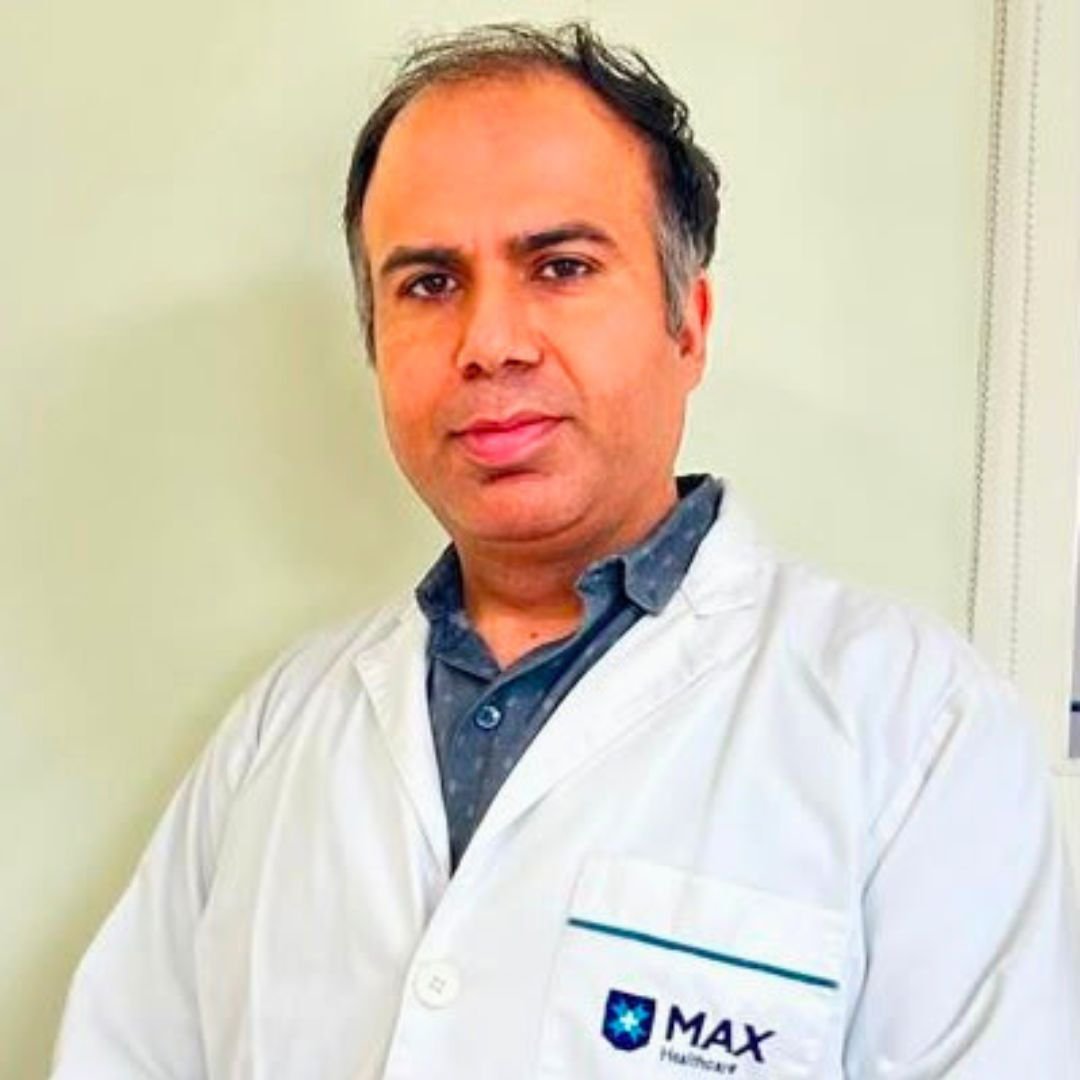
Dr Naveen Pandita is a fellowship-trained complex spine and spinal deformity surgeon and Principal Consultant – Spine Surgery & Spinal Deformity at Max Super Speciality Hospital, Vaishali, Ghaziabad. He treats conditions ranging from slipped disc and sciatica to scoliosis, spinal tumours, infections, and revision surgery.
What Does a Spine Surgeon Do?
A spine surgeon is a doctor trained to diagnose and treat disorders of the spine, including the bones, discs, joints, and the nerves they protect. Contrary to what the title suggests, spine surgeons do not operate on everyone. A large part of their work is deciding who does not need surgery, guiding non-operative care, and recommending an operation only when it is likely to help.
In India, spine surgeons usually come from an orthopaedic or neurosurgical background and then train further in spine care. That is why people often search for an “orthopedic surgeon in Ghaziabad” when they really need a spine specialist. The two overlap, but spine surgery, especially complex spine surgery, calls for additional focused training.
When Should You See a Spine Specialist?
See a spine specialist in Ghaziabad if back pain or neck pain lasts beyond a few weeks despite treatment, spreads into an arm or leg, or comes with weakness, numbness, or changes in walking. Most episodes of back pain settle on their own, so not every ache needs a specialist. Consider a consultation if you have:
- Back or neck pain that has not improved after four to six weeks of appropriate care
- Pain, tingling or numbness travelling down an arm or leg
- Leg weakness, foot drop, or a feeling that your legs give way
- Pain on walking that eases when you sit or bend forward
- A visible curve in the spine or uneven shoulders or waist, in a child, teenager or adult
- Night pain or pain at rest that does not settle
- A history of cancer, tuberculosis or repeated infections along with new spinal pain
- Persisting symptoms after a previous spine operation
Symptoms are not diagnoses. “Back pain” describes a complaint, whereas a slipped disc or spinal stenosis is a diagnosis that needs examination and imaging to confirm.
Common Conditions a Spine Surgeon Treats
A spine doctor in Ghaziabad will commonly see the following:
- Slipped (herniated) disc: the soft cushion between vertebrae bulges or ruptures and may press on a nerve.
- Sciatica: pain radiating from the lower back or buttock down the leg, most often from nerve irritation in the lumbar spine.
- Cervical spondylosis and cervical disc disease: neck wear-and-tear that can cause arm pain, or in some cases compression of the spinal cord itself.
- Lumbar spinal stenosis: narrowing of the spinal canal, typically causing leg pain or heaviness on walking.
- Spondylolisthesis: one vertebra slipping forward over the one below.
- Scoliosis and other spinal deformities: abnormal curvature of the spine, in children, adolescents or adults.
- Spinal tumours and metastatic spinal disease: growths in or around the spine, including cancer that has spread from elsewhere.
- Spinal tuberculosis and infections: infection of the vertebrae or discs.
- Failed or problematic previous surgery: cases needing revision.
Is Every Case of Back Pain Treated With Surgery?
No. Most back pain and many slipped discs improve without surgery. Treatment usually moves in stages, and surgery sits near the end for a specific group of patients.
Conservative (non-surgical) treatment
This is the first step for most people. It can include a period of relative activity modification, medicines prescribed by a doctor, physiotherapy, posture and core-strengthening work, weight management and ergonomic changes. Many patients with sciatica from a disc problem improve steadily over weeks to months.
Injections and minimally invasive procedures
If pain persists, targeted image-guided injections, such as epidural or nerve root injections, may be considered to calm inflamed nerves and make rehabilitation possible. They aim to relieve symptoms, not remove the underlying cause, and they suit some diagnoses far better than others.
Minimally invasive spine surgery
Minimally invasive spine surgery uses smaller incisions and specialised instruments to reach the problem with less disturbance to surrounding muscle than traditional open surgery. Endoscopic spine surgery is one form of this approach, using a narrow tube and a camera to treat selected disc and stenosis problems through a very small opening. These techniques can be excellent options for the right patient, but not every condition, or every patient, is suitable. The choice of technique should follow the diagnosis, not the other way around.
When Is Spine Surgery Necessary?
Spine surgery is generally recommended when nerve or spinal cord compression is causing significant or worsening neurological problems, when severe pain persists despite proper non-operative treatment, or when there is instability, deformity, tumour or infection that cannot be managed otherwise.
Situations where surgery is commonly discussed include:
- Progressive weakness or loss of function
- Spinal cord compression (myelopathy) in the neck or back
- Cauda equina syndrome (an emergency, described below)
- Disabling pain with imaging that clearly matches the symptoms and no response to adequate conservative care
- Significant spinal instability or slippage
- Progressive or severe deformity
- Spinal tumours, or infections causing bone destruction or neurological risk
Surgery, like any operation, carries risks, and results cannot be guaranteed. The decision depends on your diagnosis, imaging, symptoms, neurological examination, overall health and how you have responded to other treatment.
Why Complex Spine and Spinal Deformity Cases Need Specialised Expertise
Some spine problems are straightforward, while others involve multiple levels of the spine, distorted anatomy, weakened bone, previous surgery or serious systemic disease. Correcting a scoliosis, reconstructing the spine after a tumour, treating a destructive infection or revising a failed fusion demands detailed planning, advanced implants, careful neurological monitoring and a team that handles such cases regularly, including anaesthesia, critical care, physiotherapy and rehabilitation.
This is why fellowship training in complex spine and deformity surgery matters. It gives a surgeon structured experience in the planning and techniques these cases need, beyond routine spine procedures.
What to Look for When Choosing a Spine Surgeon
Choose the best spine surgeon in Ghaziabad based on verifiable training, relevant experience with your specific condition, honest communication, and the support of the hospital where you will be treated, not on advertising claims or rankings. Useful things to check:
- Qualifications and spinal fellowship training: Search for accredited degrees and spine-specific training.
- You have prior experience with this problem: A surgeon with competence in challenging deformity work may not be a suitable fit for someone whose practice focuses on standard disk surgery, and vice versa.
- A willingness to discuss nonsurgical options: A qualified surgeon reveals why surgery is or is not necessary.
- Risks are well disclosed, and expectations are reasonable: Be sceptical of anyone who offers immediate pain relief or no risk.
- Hospital infrastructure: Intraoperative imaging, neuromonitoring, critical care support, and rehabilitation services are all beneficial to spine surgery.
- Feel at ease when going to the doctor: You should be allowed to raise questions and seek second opinions.
No one can honestly be called the objective “best” for every patient. The right specialist is the one whose training and experience match your particular problem.
Why Location Matters for Patients in Ghaziabad and Delhi NCR
Spine care is not a single visit. You may need imaging, follow-up reviews, physiotherapy, and, if you have surgery, several check-ups. Being able to reach your surgeon and hospital easily matters, especially for older patients or those with limited mobility.
Max Super Speciality Hospital in Vaishali is easily accessible from Indirapuram, Vasundhara, Kaushambi, and other areas of Ghaziabad, as well as from East Delhi and Noida. Many people in these locations who seek a “spine specialist near me” or a “spine surgeon near Ghaziabad” discover that Vaishali offers convenient access to professional care. If you live a long distance away, evaluate whether follow-up travel is feasible, and ask the clinic if some evaluations can be completed by teleconsultation.
Dr Naveen Pandita: Spine Surgeon in Vaishali, Ghaziabad
Is Dr Naveen Pandita a spine surgeon in Ghaziabad? Yes. He is Principal Consultant – Spine Surgery & Spinal Deformity at Max Super Speciality Hospital, Vaishali, Ghaziabad.
Training and credentials
Dr Naveen Pandita is a fellowship-trained complex spine and spinal deformity surgeon. His training includes:
- Complex Spine & Spinal Deformity Fellowship, Queen’s Medical Centre, Nottingham, UK
- Neurospine Fellowship, Cambridge University Hospital
- Spine Deformity Fellowship, National University Hospital, Singapore
- DNB Orthopaedics
- MIPEd, UK
Areas of clinical practice
His practice covers a broad range of spine conditions, with particular focus on complex and reconstructive work:
- Complex spine surgery and spinal deformity correction
- Scoliosis surgery
- Minimally invasive and endoscopic spine surgery
- Cervical and lumbar spine surgery
- Spinal stenosis and spondylolisthesis
- Slip disc and sciatica
- Spinal tumours, reconstruction and metastatic spinal disease
- Spinal tuberculosis and infections
- Revision spine surgery
For patients in Ghaziabad searching for a scoliosis surgeon, a spinal deformity surgeon or a complex spine surgeon, this combination of international fellowship training and hospital-based practice at Max Vaishali is relevant. It is not a guarantee of any specific outcome for any individual patient. Whether he is the right choice for you can only be determined at a consultation, after your symptoms and scans are reviewed.
What to Expect During a Spine Consultation
A good consultation is mostly a conversation and an examination. You can typically expect:
- A detailed history: when the problem began, what worsens or eases it, and what treatment you have already tried.
- A physical and neurological examination: checking posture, movement, strength, sensation, and reflexes.
- A review of imaging: bring your MRI, X-ray, or CT films and reports, along with previous prescriptions and any earlier surgical records.
- A discussion of options: conservative care, injections, minimally invasive procedures, or surgery, with the reasoning behind each.
- Time for your questions, and no pressure to decide on the spot.
Questions to Ask Before Deciding on Spine Surgery
- What exactly is my diagnosis, and how does it match my scan?
- What happens if I wait or continue non-surgical treatment?
- Are there alternatives, including less invasive ones?
- What are the risks and likely benefits in my specific case?
- What will recovery involve, and what rehabilitation will I need?
- How often do you treat this condition?
- Would you be comfortable with me getting a second opinion?
When to Seek Urgent Medical Attention
Seek emergency care immediately if back or neck problems come with loss of bladder or bowel control, numbness around the groin or inner thighs (saddle area), or rapidly worsening leg or arm weakness. These may indicate cauda equina syndrome or spinal cord compression, where delay can cause permanent damage. Go to the nearest emergency department without waiting for an appointment if you have:
- New or progressive limb weakness
- Loss of control over urine or stool, or difficulty passing urine
- Saddle-area numbness
- Rapidly worsening neurological symptoms
- Severe back pain with fever, chills, or signs of systemic illness
- Significant trauma, such as a fall or road accident, followed by pain with numbness or weakness
Frequently Asked Questions About Pediatric Scoliosis Surgery
Who is the best spine surgeon in Ghaziabad?
No independent ranking can objectively name one best surgeon for every patient. The right choice depends on your condition. Dr Naveen Pandita is a fellowship-trained complex spine and spinal deformity surgeon at Max Vaishali, and his training and areas of practice are outlined above so you can judge whether he suits your needs.
Who is a spine specialist in Vaishali, Ghaziabad?
Dr Naveen Pandita is Principal Consultant – Spine Surgery & Spinal Deformity at Max Super Speciality Hospital, Vaishali, Ghaziabad.
When should I see a spine surgeon for back pain?
Consider it when pain persists beyond several weeks, spreads into a limb, or comes with weakness, numbness, or walking difficulty. Seek emergency care for the red-flag symptoms listed above.
Do all slipped discs require surgery?
No. Many slipped discs improve with time and conservative treatment. Surgery is usually considered for significant or worsening nerve compromise, or persistent severe symptoms despite proper non-operative care.
Is every back pain problem a surgical problem?
No. Most back pain is not surgical. A specialist's role includes identifying the minority of cases where surgery helps.
What is minimally invasive spine surgery?
It refers to techniques using smaller incisions and specialised instruments to reduce disruption to surrounding tissues. It is suitable for selected conditions, not every spine problem.
What is endoscopic spine surgery?
It is a form of minimally invasive surgery in which a narrow tube with a camera and instruments is used to treat certain disc and stenosis problems through a small opening. Suitability depends on the diagnosis and anatomy.
When should scoliosis be evaluated by a specialist?
Get an evaluation if you notice uneven shoulders, a prominent shoulder blade, an uneven waist, or a visible curve, especially in a growing child, or if an adult develops a progressive curve with pain or difficulty standing upright.
How do I choose a spine surgeon near me?
Check spine-specific training, experience with your condition, willingness to discuss non-surgical options, honest talk about risks, hospital facilities,s and how convenient follow-up will be.
Where does Dr Naveen Pandita practice?
He practises at Max Super Speciality Hospital, Vaishali, Ghaziabad. Please confirm current appointment details directly with the hospital.
Final Thoughts
Finding the best spine surgeon in Ghaziabad is really about finding the right match between your condition and a surgeon’s training, experience, and communication. Most spine problems do not need surgery, and a trustworthy specialist will say so. If your problem is complex, such as a deformity, tumour, infection, or a failed previous operation, specialist fellowship training matters even more. Dr Naveen Pandita’s training and practice at Max Vaishali make him a specialist worth consulting for these conditions. Bring your scans, ask your questions, and choose the path that is right for you.