
Scoliosis Surgery Case Study: Surgical Correction of Spinal Deformity
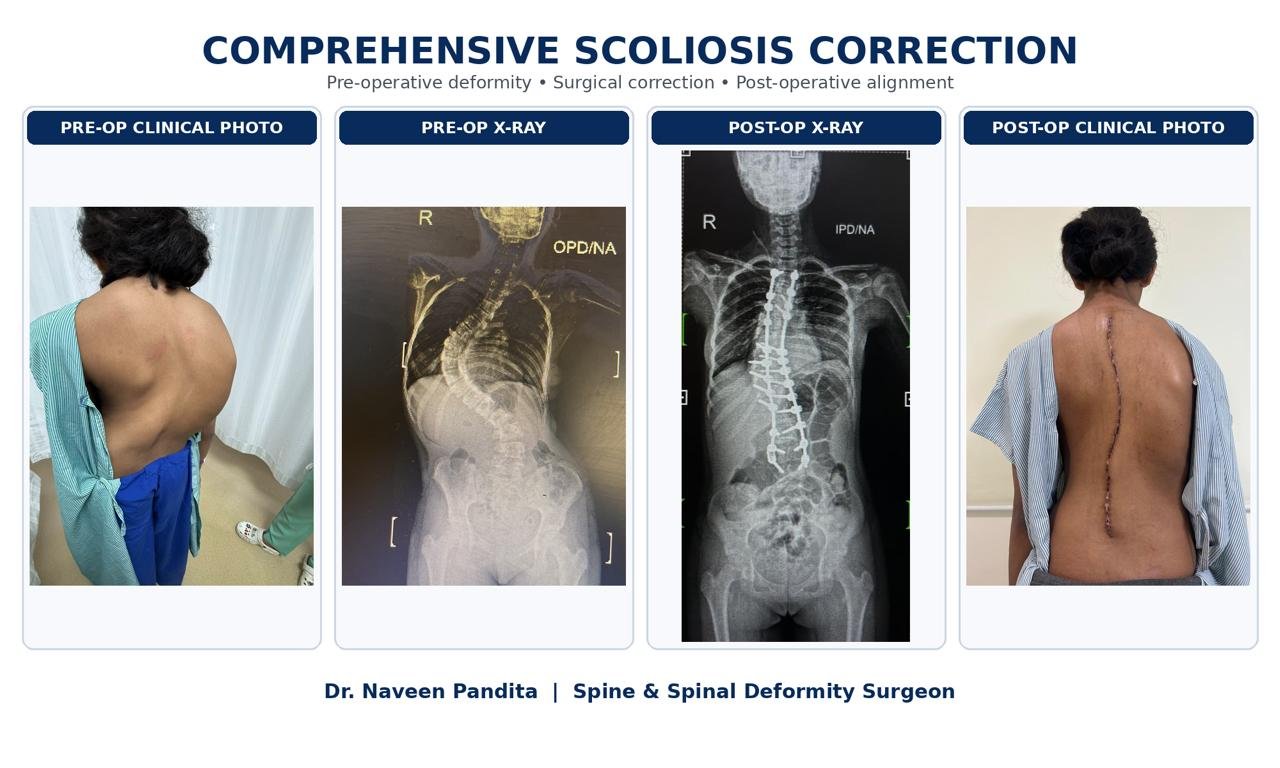
A Clinical and Radiological Assessment of Scoliosis Correction
This scoliosis surgery case study presents the clinical and radiological assessment of a patient with significant spinal deformity, followed by surgical correction and postoperative clinical evaluation.
Scoliosis is a three-dimensional spinal deformity characterized by an abnormal sideways curvature of the spine along with changes in spinal rotation and alignment. Depending on the severity and pattern of the curve, patients may develop visible trunk asymmetry, uneven shoulders or waist, altered posture, back discomfort, or progressive spinal deformity.
The decision to treat scoliosis surgically is individualized and depends on several factors, including the magnitude and pattern of the spinal curvature, spinal balance, skeletal maturity, progression of the deformity, symptoms, and overall clinical condition.
Preoperative Clinical Assessment
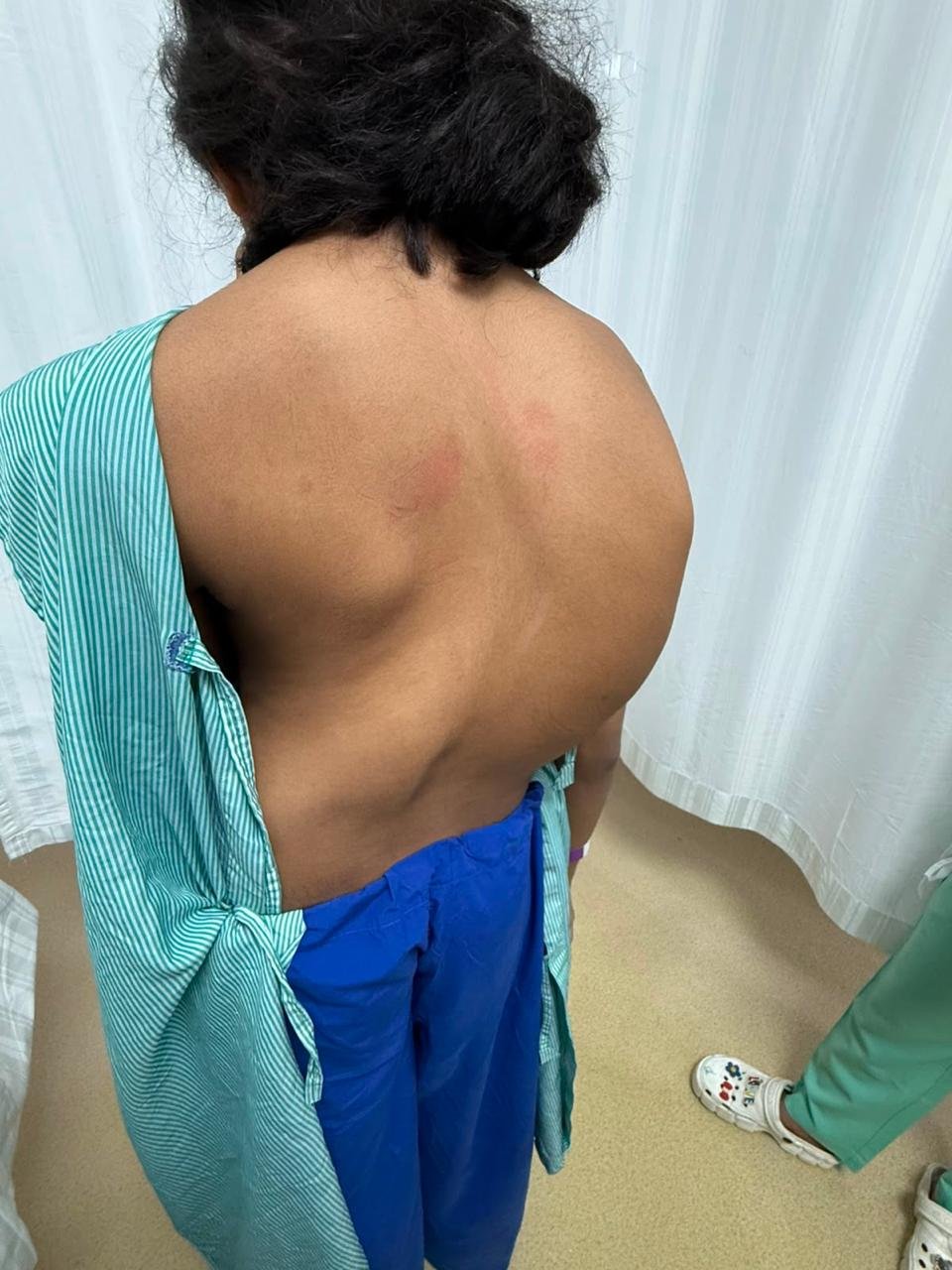
Clinical examination is an essential first step when evaluating a patient with scoliosis. In this case, the preoperative photographs demonstrate a clearly visible spinal deformity with significant trunk asymmetry.
The clinical appearance of the back provides important information about the external manifestation of the spinal deformity and is assessed together with physical examination and appropriate imaging.
Preoperative X-Ray Assessment
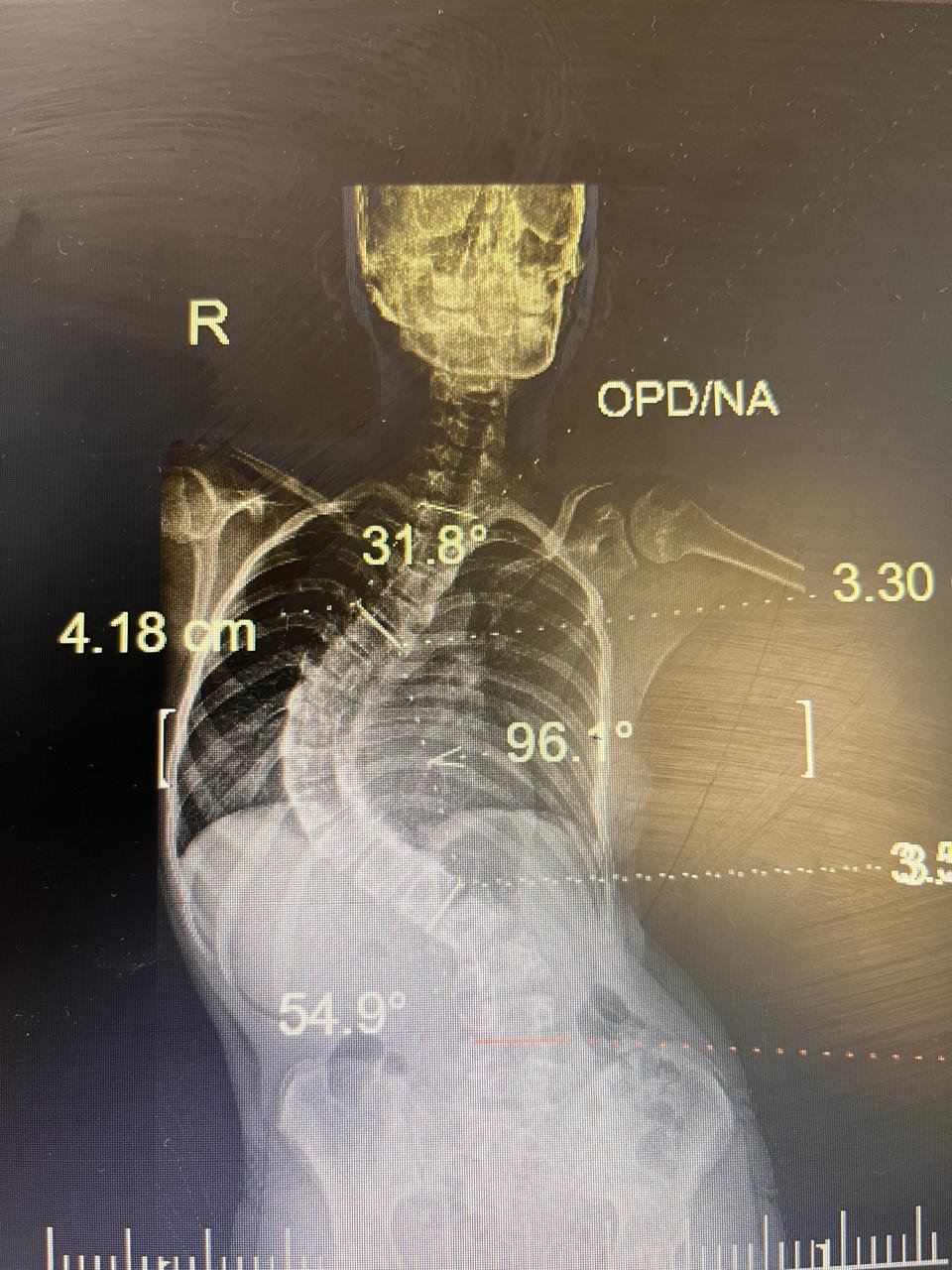
A standing whole-spine X-ray was performed to evaluate the patient’s spinal alignment and quantify the scoliotic curvature.
The radiograph demonstrates a significant scoliotic deformity involving the thoracic and lumbar regions. Cobb angle measurements are marked on the preoperative X-ray and provide an objective assessment of the magnitude of the spinal curvature.
The Cobb angle is one of the standard radiological measurements used to quantify scoliosis. Accurate standing whole-spine imaging is important for assessing the curve pattern, spinal balance, and other characteristics that influence surgical planning.
Why is a Cobb angle important in scoliosis?
The Cobb angle helps quantify the degree of spinal curvature on an X-ray. However, the decision to recommend scoliosis surgery is not based on the Cobb angle alone. Age, skeletal maturity, curve pattern, progression, symptoms, spinal balance, and other clinical and radiological factors are also considered.
Surgical Correction of Scoliosis
Following detailed clinical and radiological evaluation, the patient underwent surgical correction of the spinal deformity.
The objective of scoliosis surgery is not simply to make the spine appear straighter. Surgical planning aims to achieve appropriate spinal alignment and balance while correcting the deformity safely and maintaining neurological function.
The surgical technique and levels of spinal instrumentation are selected according to the individual characteristics of the deformity. Factors such as curve pattern, flexibility, spinal alignment, balance, and the patient’s overall condition are considered during treatment planning.
In complex scoliosis, careful preoperative planning and appropriate intraoperative techniques are important to achieve a controlled and balanced correction.
Postoperative Clinical Assessment
The postoperative clinical photograph shows the patient’s back following surgical correction. It provides a clinical comparison with the preoperative photographs and documents the postoperative appearance of the back.
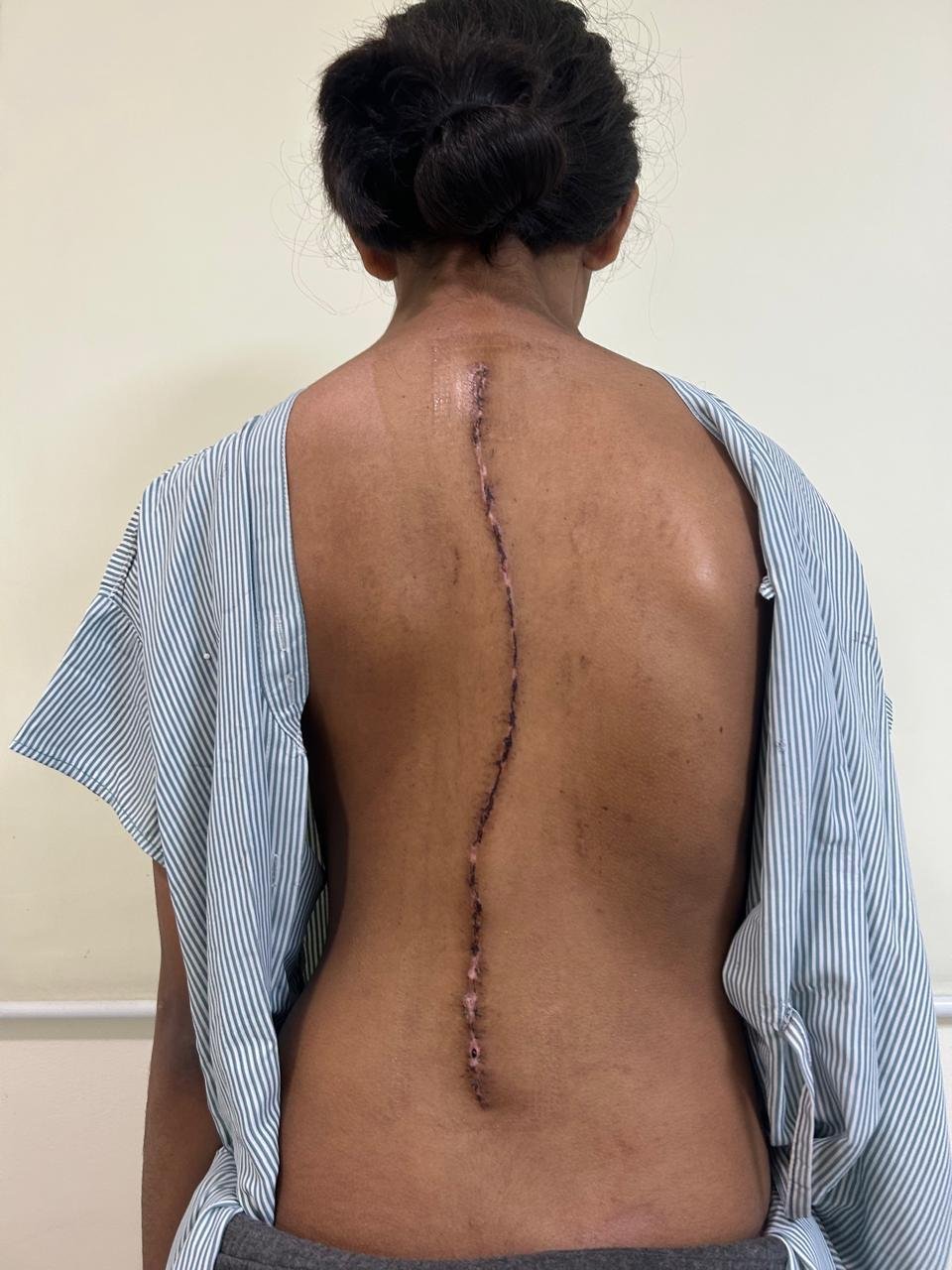
The postoperative appearance is assessed together with clinical examination and postoperative imaging to evaluate spinal alignment and the overall result of treatment.
Where available, postoperative standing X-rays and documented follow-up measurements provide additional objective information regarding the correction achieved.
Key Takeaways From This Scoliosis Surgery Case Study
- Scoliosis should be evaluated through both clinical examination and appropriate spinal imaging.
- Standing whole-spine X-rays help assess the magnitude and pattern of spinal curvature.
- Cobb angle measurement is an important component of radiological scoliosis assessment.
- Surgical treatment is individualized according to the patient’s deformity, spinal balance, skeletal maturity, symptoms, and other relevant factors.
- The goal of scoliosis surgery extends beyond curve correction and includes achieving appropriate spinal alignment and balance.
- Postoperative clinical assessment and radiological follow-up are important for evaluating the outcome of spinal deformity correction.
Scoliosis Surgery and Spinal Deformity Treatment in Noida And Delhi
Patients with scoliosis may present with a visible spinal curve, uneven shoulders, trunk asymmetry, changes in posture, back discomfort, or a progressively worsening deformity. Some spinal curves can be monitored or treated without surgery, while selected patients may require operative correction.
Dr Naveen Pandita is a Spine & Spinal Deformity Surgeon involved in the evaluation and surgical management of spinal conditions, including scoliosis and complex spinal deformities.
A specialist assessment can help determine the nature and severity of a spinal curvature and whether observation, non-operative treatment, or surgical correction may be appropriate.
When should a person with scoliosis see a spine specialist?
A specialist evaluation may be appropriate when there is a noticeable spinal curvature, increasing trunk asymmetry, progressive deformity, persistent back symptoms, neurological symptoms, or a known scoliosis diagnosis requiring further assessment.
Treatment should always be based on an individual clinical examination and appropriate imaging rather than on photographs or online information alone.
Conclusion
This scoliosis surgery case study demonstrates the importance of combining clinical examination with detailed radiological assessment when evaluating significant spinal deformity.
Preoperative clinical photographs demonstrate the visible trunk asymmetry, while the standing whole-spine X-ray provides objective information about the spinal curvature and Cobb angle measurements. Following individualized surgical planning, postoperative clinical assessment helps document the patient’s appearance after deformity correction.
Scoliosis treatment should always be individualized. A thorough evaluation by an experienced spine and spinal deformity surgeon is important when determining the most appropriate management for a patient with significant or progressive spinal curvature.