Spine Surgeon in Meerut: How to Choose the Right Spine Specialist
If you are looking for a spine surgeon in Meerut, you are probably dealing with pain, numbness, or weakness that has begun to affect daily life. Choosing the right specialist matters because the spine protects the spinal cord and nerves. An unclear diagnosis or an operation that was not needed can cost you months of recovery.
This guide explains what spine surgeons treat, how to evaluate a spine specialist in Meerut, when surgery is and is not needed, and when patients from Western Uttar Pradesh may choose to consult a specialist in nearby Ghaziabad or Noida.
Who Is a Spine Surgeon and What Conditions Do They Treat?
A spine surgeon is a doctor, usually trained in orthopaedics or neurosurgery, who diagnoses and treats disorders of the vertebrae, discs, spinal cord, and spinal nerves. Many recommend non-surgical care first and operate only when it is clinically justified.
A spine specialist doctor may evaluate:
- Back pain, whether mechanical, chronic or nerve-related
- Slipped disc (herniated disc) in the neck or lower back
- Sciatica, pain travelling down the leg from a compressed nerve
- Cervical spondylosis, age-related wear of the neck spine
- Cervical disc disease, which can cause arm pain or spinal cord compression
- Spinal stenosis, narrowing of the canal that houses the nerves
- Spondylolisthesis, forward slip of one vertebra over another
- Scoliosis, a sideways curvature of the spine
- Kyphosis and other spinal deformities
- Spinal tumours and infections
- Complex or revision problems, where earlier spine surgery has not given the expected result
How to Choose a Spine Specialist in Meerut
No objective ranking can name one surgeon as superior. A more useful question is which surgeon’s training and experience suit your diagnosis. These criteria can help.
- Qualifications and spine-specific training. Look for recognized surgical qualifications (such as MS/DNB Orthopedics or MCh Neurosurgery), as well as additional spine surgery training. You can verify registration with the relevant state medical council or the NMC register.
- You’ve had prior experience with this issue. Single-level disk herniation surgery differs from deformity correction or revision surgery.
- There are surgical and non-surgical options available. Medication, physical therapy, injections, and, if necessary, lifestyle changes are all part of a comprehensive consultation before surgery.
- Minimally invasive methods must be utilized with prudence. These are useful in some situations, but not all.
- Hospital facilities. Advanced imaging, a competent anesthesia team, critical care unit support, and rehabilitation services are all available for complex surgeries. Neuromonitoring, which measures nerve function during surgery, may be employed in more dangerous procedures.
- Clear guidance and informed consent. You should be informed in straightforward terms about the diagnosis, alternatives, risks, expected benefits, and recovery schedule.
- Openness to differing perspectives.
Be cautious of anyone who guarantees results, advises surgery before examining you and reviewing your scans, or dismisses questions about risk.
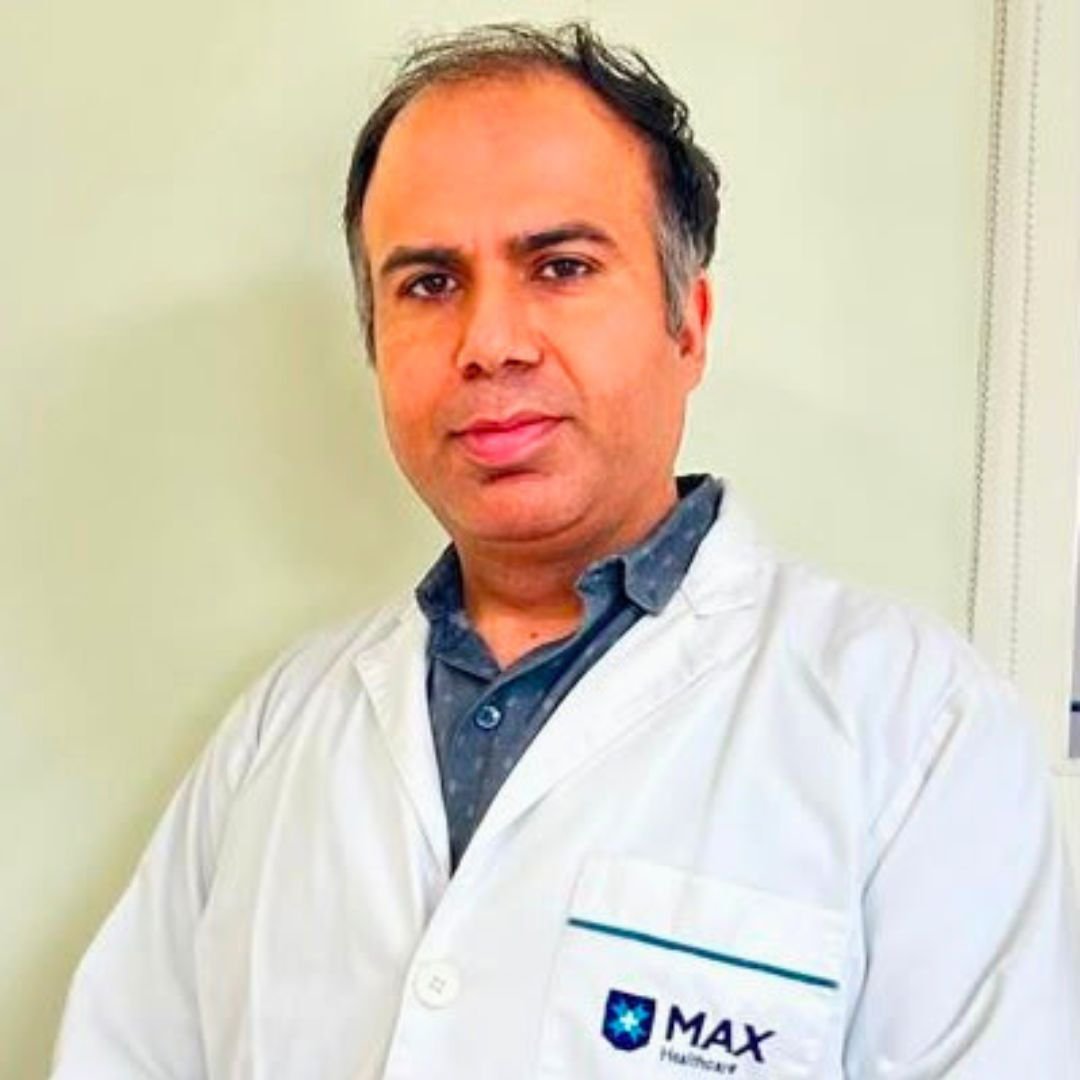
Dr Naveen Pandita: Spine & Spinal Deformity Surgeon
Dr Naveen Pandita is a Complex Spine & Spinal Deformity Surgeon in Noida and at Max Super Speciality Hospital, Vaishali, Ghaziabad.
His clinical areas include:
- Spinal deformity, including scoliosis and kyphosis
- Complex and revision spine procedures
- Minimally invasive spine surgery and endoscopic spine surgery, where clinically suitable
- Cervical and lumbar spine disorders
Treatment is planned individually after clinical examination and review of imaging. Patients can compare any doctor’s qualifications, registration details, and area of practice using the criteria above.
Why Patients From Meerut May Consult a Specialist in Noida or Ghaziabad
Many spine problems can be managed in Meerut. Some patients, however, choose to consult a specialist elsewhere in Delhi NCR, particularly when the condition is complex, or they want a second opinion.
A patient may consider a spine surgeon in Ghaziabad, a spine surgeon in Noida, a spine specialist in Noida or a spine doctor in Noida when:
- A scoliosis or kyphosis curve is large or worsening
- Earlier spine surgery has not helped, and revision is being discussed
- A tumour or infection involves the spine
- Multi-level or high-risk surgery has been advised
- A second opinion is wanted before a major operation
Ghaziabad and Noida are both accessible from Meerut, and the decision is frequently based on ease of travel. Dr Naveen Pandita sees patients at Max Super Speciality Hospital in Vaishali, Ghaziabad, as well as the Noida Sports Injury Centre Clinic.
This does not imply that every patient from Meerut must travel. The best option is determined by your diagnosis, not simply by proximity.
Common Spine Problems and Their Treatment Options
Back Pain
The majority of back pain is muscular or mechanical in nature and resolves within a few weeks. Medication, physiotherapy, posture adjustment, and activity modification are commonly used to treat back pain in Meerut.
A specialist opinion is worthwhile when pain lasts beyond several weeks despite treatment, wakes you at night, or comes with leg weakness, numbness, or fever. Surgery is considered only when a structural cause matches the symptoms, and conservative care has not helped.
Slipped Disc and Sciatica
A slipped disc occurs when the soft inner section of a disc slides through the outer wall, aggravating a nerve. Sciatica, which is characterised by shooting pain, tingling, or numbness down the leg, is a common result of lower back pain.
Slipped disk and sciatica therapy in Meerut are usually started conservatively, as many herniations improve over weeks to months. Injections may help certain patients. If the pain persists, weakness develops, or compression worsens, surgery, such as a microdiscectomy or endoscopic discectomy, may be explored.
Cervical Spondylosis
Cervical spondylosis is the wear and tear on the neck’s discs and joints as we age. Symptoms include hand stiffness, shoulder or arm pain, and tingling. Patients with cervical myelopathy may experience clumsy hands, balance issues, or difficulties walking.
Mild cases can frequently be treated with physiotherapy, neck exercises, and ergonomic adjustments. A cervical spine specialist in Meerut can look for evidence of cord compression, and in that scenario, surgery may be recommended to prevent further neurological impairment.
Spinal Stenosis
Spinal stenosis is narrowing of the canal that houses the spinal cord and nerves, most often in the lower back. Typical symptoms are leg pain, heaviness, or cramping when walking that eases on sitting or bending forward.
Exercise, medication, and injections help many patients. Spinal stenosis treatment in Meerut may involve decompression surgery, sometimes with stabilisation, when walking is severely limited or nerve function is declining.
Scoliosis
Scoliosis is a sideways curvature of the spine with rotation of the vertebrae. It can appear in adolescence or develop in adulthood through degeneration. Management depends on age, curve size and progression, and is covered in more detail below.
Spondylolisthesis
In spondylolisthesis, one vertebra slips forward over the one below. Symptoms include lower back pain, leg pain and stiffness. Mild slips are often managed with physiotherapy and activity modification. Lumbar spine surgery, usually decompression with fusion, may be considered for high-grade slips, persistent nerve symptoms or instability.
Complex Spinal Deformities
Complex deformities include severe scoliosis, kyphosis, flat-back syndrome and deformity after previous surgery. They need detailed imaging, careful planning, and often a multidisciplinary team. Evaluation of spinal deformity can begin locally, and complex spine surgery is generally best handled by surgeons who treat such cases regularly.
Minimally Invasive Spine Surgery in Meerut
Minimally invasive spine surgery uses small incisions, specialised instruments, and cameras or microscopes to treat spinal problems with less disturbance to surrounding muscle than traditional open surgery.
Potential advantages in selected patients:
- Smaller incisions
- Less muscle disruption
- Reduced blood loss
- Shorter hospital stay and faster early recovery
Limitations:
- Not every spinal condition can be treated this way
- Some procedures need specific equipment and training
- Extensive deformity, tumours or complex revisions often need open or hybrid techniques
Endoscopic spine surgery is a type of minimally invasive surgery that involves inserting a thin camera through a very small incision. It is mostly used to treat specific disc herniations and nerve compression.
Patient selection matters more than technique. A minimally invasive approach is not automatically better for every patient, and the right operation is the one that fits your diagnosis.
Scoliosis Treatment in Meerut
Scoliosis therapy in Meerut is determined by age, curve size, and progression. Whether you are looking for a scoliosis doctor or a scoliosis expert in Meerut, the first step is to get an appropriate assessment, which usually includes full-spine X-rays.
Adolescent scoliosis is often found during growth. Small curves are monitored. Bracing may be advised in selected growing children with moderate curves, and surgery is considered for large or progressing curves.
Adult scoliosis is often degenerative and may cause back pain, leg symptoms, or visible imbalance. Treatment can include physiotherapy, pain management and injections, with surgery reserved for significant pain, nerve compression or progressive deformity.
Options include:
- Observation with periodic imaging
- Physiotherapy and exercise for symptom relief (exercise alone does not correct a structural curve)
- Bracing in selected patients who are still growing
- Surgical assessment for severe or progressive curves
- Deformity correction, typically with screws, rods and fusion
Scoliosis correction surgery is a complicated procedure; thus, many families seek a second opinion from a spinal deformity surgeon in Delhi NCR before making a decision. A specialist should examine progressive, painful, or severe curves rather than simply seeing them.
When Should You See a Spine Specialist?
See a spine specialist if back or neck pain persists despite appropriate conservative treatment, or keeps recurring.
Seek urgent medical attention if you have:
- Sudden or progressive leg or arm weakness
- Loss of bladder or bowel control
- Numbness in the saddle area (inner thighs, groin, buttocks)
- Difficulty walking or loss of balance
- Severe pain after significant trauma
- Severe back pain with fever, chills, or unexplained weight loss
- New severe spinal pain with a history of cancer
Some of these can be symptoms of a spinal emergency. Rather than waiting for a usual appointment, go to your nearest emergency department.
What Happens During a Spine Consultation?
A thorough consultation typically includes:
- Medical history: symptoms, duration, previous treatment and other health conditions
- Neurological examination: strength, reflexes, sensation and walking
- Review of previous imaging: bring all X-rays, MRI scans,s and reports
- Additional examinations: such as MRI, CT, or standing X-rays, as indicated
- Diagnosis: a clear explanation of the likely cause
- Treatment options: surgical and non-surgical
- Risks and benefits: what can go wrong and what to expect
- Second opinion when you or the doctor feel it is appropriate
- Follow-up planning: monitoring, rehabilitation and review
When Is Spine Surgery Actually Necessary?
Surgery is considered when a clear structural problem explains your symptoms and non-surgical care is unlikely to be enough, or when delay could risk permanent nerve damage.
Decisions depend on:
- Diagnosis and imaging findings
- Symptoms and neurological examination
- Duration and severity
- Response to conservative treatment
- Effect on daily function
- Overall health and surgical risk
- Your own goals and preferences
Many people with disc problems, sciatica, or mild degeneration never need an operation. Those with progressive weakness, spinal cord compression, or significant deformity may need timely surgery.
Recovery, Rehabilitation and Return to Daily Activities
Recovery is gradual, and timelines below are general estimates, not guarantees:
- Hospital stay: Often several days, depending on the procedure and the patient’s progress.
- First weeks: Walking is encouraged. Bending, lifting,g and twisting are restricted.
- School or desk work: Many adolescents return within a few weeks to a couple of months.
- Physical activity: Light activity increases progressively. Contact sports and heavy lifting usually wait several months, until fusion is sufficiently advanced.
- Long term: Fusion matures over many months. Follow-up visits with X-rays track healing.
Adults, particularly those undergoing larger reconstructions, often need a longer recovery and structured rehabilitation.
Questions to Ask a Spine Surgeon Before Surgery
- What is my diagnosis, and how do my scan results explain my symptoms?
- Are there non-surgical alternatives, and have I tried them properly?
- What are the pros and drawbacks of this operation for me?
- How often do you perform this procedure?
- Is a minimally invasive procedure right for me, and why or why not?
- What happens if I choose to wait?
- What will recovery look like, including hospital stay and return to work?
- What rehabilitation will I need?
- What are the possible difficulties, and how are they handled?
- Will neuromonitoring or other safety measures be used?
- What is the estimated overall cost, and what does it include?
- Are you comfortable with me getting a second opinion?
Frequently Asked Questions About Spine Surgeons in Meerut
How do I choose a spine surgeon in Meerut?
Verify registration and surgical qualifications, ask about spine-specific training and experience with your exact condition, and confirm that non-surgical options are discussed. Look for clear explanations of risk and openness to a second opinion.
Is there an official ranking of spine surgeons in Meerut?
No. There is no objective, independent ranking, and doctors in India are not permitted to advertise themselves as “best”. Compare qualifications, experience with your condition, hospital facilities, and communication instead.
When should I see a spine surgeon?
See one if pain persists despite treatment, if you have leg or arm weakness or numbness, if walking is affected, or if a spinal curve is worsening. Bladder or bowel changes need urgent care.
Is every slipped disc treated with surgery?
No. Most slipped discs improve with medication, physiotherapy, and time. Surgery is considered when nerve compression causes significant weakness or severe pain that does not respond to conservative care.
What is minimally invasive spine surgery?
It is a group of techniques that treat spinal problems through small incisions using specialised instruments and cameras. In suitable patients, it may mean less muscle disruption and faster early recovery, but it is not right for every condition.
Who treats scoliosis in Meerut?
Orthopaedic spine surgeons and neurosurgeons evaluate scoliosis. For progressive, severe, or complex curves, patients often seek a second opinion from a spinal deformity specialist in Ghaziabad, Noida, or elsewhere in Delhi NCR.
When does cervical spondylosis require surgery?
Usually when there is spinal cord compression, progressive weakness, hand clumsiness or balance problems, or severe arm pain that does not improve with conservative treatment.
Can I consult a spine surgeon in Noida or Ghaziabad if I live in Meerut?
Yes. Patients may consult a doctor in any city, particularly for complex deformity, revision surgery, or a second opinion.
When should I seek a second opinion for spine surgery?
When a major or multi-level operation is advised, when the diagnosis seems unclear, or when you are unsure about the plan.
What conditions are treated by a spine surgeon?
Back pain, slipped discs, sciatica, cervical spondylosis, spinal stenosis, spondylolisthesis, scoliosis, kyphosis, spinal tumours and infections, fractures, and complex or revision spine problems.
Consultation
Choosing a spine surgeon in Meerut begins with a comprehensive evaluation and frank discussion of your options. If you are experiencing persistent pain, neurological issues, a growing deformity, or a surgical recommendation that you would like to review, speaking with a skilled spine expert will help you select your next steps. Bring previous scans and reports.
Dr Naveen Pandita’s consultation details are available through the contact information on this website.
Medical disclaimer: This article is for general information only and does not replace an in-person consultation. It is not an advertisement or a solicitation. Treatment decisions should be based on individual clinical assessment by a qualified doctor.